

Living with diabetes, neuropathy, lymphedema, or chronic swelling can make footwear more than a style decision. The wrong shoe may press on sensitive areas, rub against skin, or leave too little room when your feet change throughout the day. And when finding supportive footwear is already difficult, figuring out how to pay for it can add another layer of stress.
New Medicare Access Through CAIRS
Here is the bigger access update near the top where it belongs: CAIRS is an officially Medicare Certified provider for eligible diabetic footwear.
In plain language, that means CAIRS can help qualifying customers pursue Medicare coverage for certain diabetic shoes and related footwear products that meet Medicare requirements. It does not mean every person with diabetes is automatically covered, every CAIRS shoe is covered, or every Humana Medicare plan works the same way.
Medicare coverage may be available for qualifying people with diabetes who meet applicable medical-necessity and documentation requirements. Eligibility depends on Medicare rules, your diagnosis, provider documentation, qualifying foot conditions, the required prescription or order, and the specific product being considered.
That is why CAIRS is pleased to announce that we now accept both Humana Medicare and Humana Medicaid for eligible diabetic and medically supportive footwear.
This is important news: but it comes with an important footnote: coverage is not automatic. Coverage depends on the member's plan, eligibility, medical necessity, provider documentation, qualifying conditions, authorization requirements, covered products, and any applicable supplier or billing rules.
Typical next steps usually look like this:
- Contact your treating provider about whether eligible diabetic footwear is medically appropriate for you.
- Obtain the required prescription, order, and supporting documentation.
- Contact the number on your insurance card and confirm your benefits, covered products, documentation requirements, authorizations, and any supplier or billing rules.
- Complete the fitting and measurement process so the footwear matches your clinical and comfort needs.
- Verify any out-of-pocket responsibility before the order is finalized.
CAIRS can help you navigate that process, explain what information is typically needed, and help you explore eligible product options. But CAIRS does not guarantee approval, claim payment, or product coverage. Final eligibility and coverage decisions depend on program rules, plan requirements, and the documentation submitted.
Why Supportive Footwear Matters for Diabetes and Swelling
Diabetes can affect foot health in several ways. Neuropathy may reduce sensation, making it harder to notice pressure, rubbing, or a small irritation inside a shoe. Circulation concerns and foot changes can also make a standard, narrow shoe a poor match.
Swelling brings its own challenge. Feet affected by lymphedema, edema, or chronic swelling may not fit the same way in the morning and afternoon. A pair that feels comfortable at breakfast may feel restrictive by late afternoon. Feet, apparently, do not believe in keeping a consistent schedule.
Supportive footwear is designed to address those changing needs through features such as:
- Extra depth for additional vertical room
- Wider fits for more forefoot space
- Adjustable closures for a more personalized fit
- Removable insoles for orthotics or added volume
- Seamless or soft interiors to help minimize friction
- Stretch materials that accommodate changes in foot size and shape
The feature-to-benefit connection is simple: more room and adjustability can help reduce pressure points and rubbing when the shoe is properly fitted. That does not replace medical care, but it can make daily mobility more comfortable and help support a thoughtful foot-care routine.
What the Humana Medicare and Humana Medicaid Announcement Means
CAIRS now accepts both Humana Medicare and Humana Medicaid for eligible footwear purchases that meet the requirements of the applicable program and the member's individual coverage.
Humana Medicare plans may have specific rules for therapeutic or diabetic shoes, including:
- A qualifying diagnosis or medical condition
- Documentation of medical necessity
- A prescription or order from a qualified healthcare professional
- Prior authorization or preauthorization
- Specific covered product categories or billing requirements
- Quantity or frequency limits
- A fitting, measurement, or delivery process
- Eligibility requirements that must be active at the time of service
- Applicable supplier or claim-submission requirements
Humana Medicaid coverage may vary by state, plan, eligibility, medical necessity, authorization, covered products, and supplier or billing requirements.
That is why CAIRS does not promise that every shoe, every member, or every order will be covered. We do promise to help you understand the next steps before you move forward.
Humana Medicare and Humana Medicaid: Which Coverage Applies?
These are separate programs with different eligibility and coverage rules.
- Humana Medicare, including Medicare Advantage plans, may have plan-specific requirements for covered footwear, documentation, authorizations, supplier rules, and billing processes.
- Humana Medicaid coverage may vary by state, plan, eligibility, medical necessity, authorization requirements, covered products, and supplier or billing requirements.
Before ordering, contact the number on your insurance card and verify:
- Which coverage applies to your order
- Whether the specific product is covered
- What documentation is required
- Whether prior authorization is needed
- Whether there are supplier or billing rules you need to follow
- What your out-of-pocket responsibility may be
CAIRS can help you understand the process and next steps, but CAIRS cannot guarantee approval or coverage.
How CAIRS Helps Move Coverage From Clinical to Closet
The process of obtaining medically supportive footwear can feel complicated. CAIRS helps make it more manageable by connecting the clinical requirements to the practical footwear decision.
1. Start with your healthcare provider
Speak with your physician, podiatrist, or other qualified provider about your footwear needs. If you have diabetes, neuropathy, lymphedema, chronic swelling, deformity, or another foot-related concern, your provider can determine whether therapeutic or medically supportive footwear is appropriate.
Medical necessity matters. A shoe may be comfortable and supportive, but that does not automatically make it a covered benefit under Humana Medicare or Humana Medicaid.
2. Confirm your Humana Medicare or Humana Medicaid benefits
Review your member handbook or contact the number on your insurance card. Ask specifically about coverage for:
- Diabetic shoes or therapeutic footwear
- Orthopedic or medically supportive shoes
- Shoe inserts or orthotics
- Prior authorization
- Required provider documentation
- Covered product codes or product categories
- Quantity and replacement limits
- Any preferred supplier, supplier-network, or billing requirements
- Any out-of-pocket responsibility
Plan and program rules can vary, so confirm the details that apply to your specific Humana Medicare or Humana Medicaid coverage before ordering.
3. Let CAIRS help explore eligible options
Once your plan requirements are clearer, CAIRS can help you explore appropriate footwear options and understand what information may be needed for the next step.
Browse our diabetic shoe collection, lymphedema and swollen-foot collection, or neuropathy and sensitive-feet collection.
4. Choose footwear based on your needs: not just the label
Different conditions call for different fit priorities. Someone managing daily swelling may need a flexible upper and multiple adjustment points. Someone using custom orthotics may need added depth and removable insoles. Someone with neuropathy may benefit from a soft interior and reduced friction.
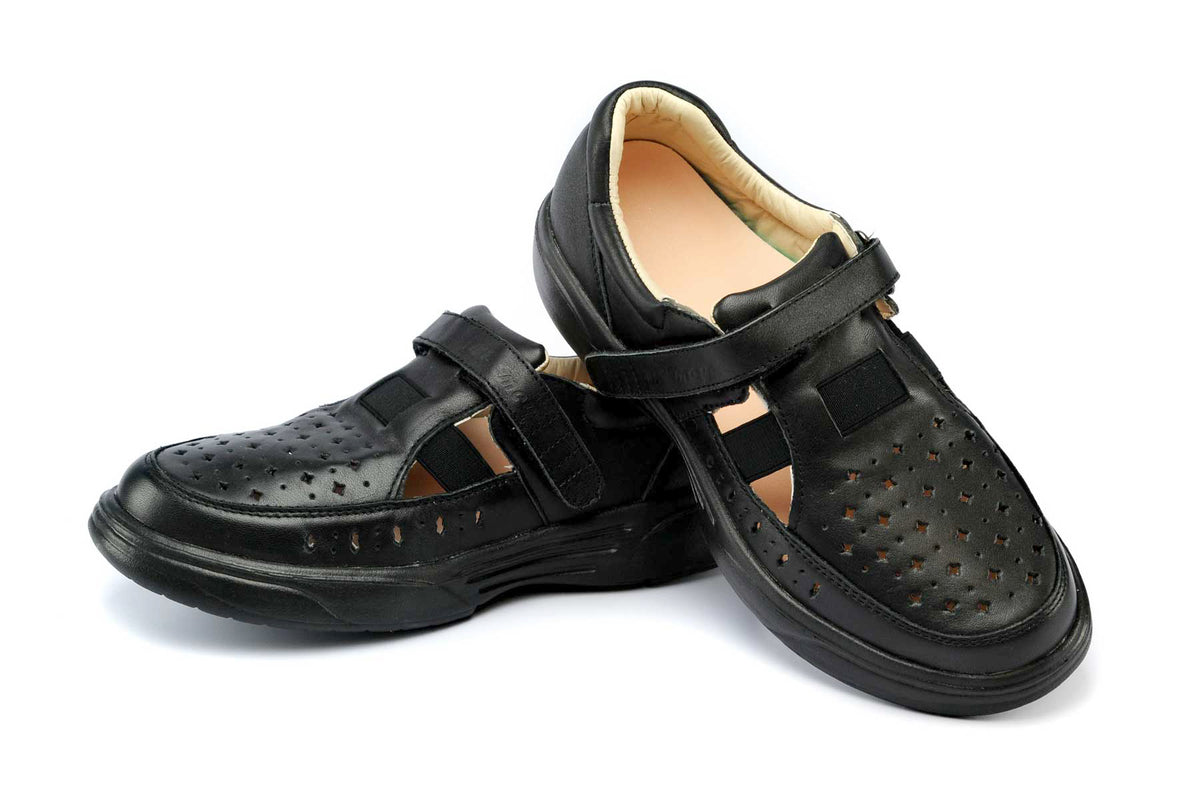
For example, the Mt. Emey 9212 Women’s Extreme-Light Orthopedic Sandal is listed with regular, 3E, and 5E fit options. Its adjustable closure and removable insole are useful features for people who need a more personalized fit. Whether it is covered under your Humana Medicare or Humana Medicaid coverage must still be verified individually.
The Mt. Emey 9708 Men’s Extreme-Light Athletic Walking Shoe offers multiple width options, including 4E, 6E, and 9E, along with removable inserts and extra depth. That added room may be helpful for orthotics, foot volume, or swelling: but the right selection depends on your measurements and clinical needs.

The 9501 Men’s Extra-Depth Orthopedic Dress Shoe brings supportive features into a more formal silhouette. It is available in multiple wide and extra-wide fits, helping demonstrate that medically supportive footwear does not have to look like a hospital hallway.
For a dressier women’s option, the Eve Women’s Stretchable Wedge Loafer combines a stretch upper, adjustable strap, extra depth, and a supportive wedge design. It is available in medium, wide, and extra-wide fits.

Product availability, sizing, and coverage can change. Always confirm that the specific product is appropriate and eligible before placing an order through Humana Medicare or Humana Medicaid.
Medicare, HSA/FSA, and Other Payment Paths
As noted above, CAIRS is an officially Medicare Certified provider for eligible diabetic footwear. Medicare coverage has its own rules, documentation standards, qualifying-condition requirements, and product limitations. Being Medicare Certified does not mean every product, every diagnosis, or every customer is automatically covered.
We also accept HSA/FSA payments where eligible. If you are using HSA or FSA funds instead of insurance, check with your plan administrator to confirm that the product and purchase qualify under your account rules.

The Queen Patricia Black Wedge is another example of CAIRS’ approach: adaptive details and supportive construction with a style-conscious finish. Your footwear can support your needs without announcing them to the entire room.
Frequently Asked Questions
Does Humana Medicare or Humana Medicaid cover diabetic shoes?
It may, depending on the applicable program, your plan, eligibility, medical necessity, provider documentation, qualifying conditions, authorization requirements, covered products, and any applicable supplier or billing rules. Contact the number on your insurance card and CAIRS to verify your specific benefits before ordering.
Does accepting Humana Medicare or Humana Medicaid mean every CAIRS shoe is covered?
No. CAIRS accepts Humana Medicare and Humana Medicaid for eligible footwear, but coverage depends on the product and your individual coverage requirements. Do not assume that a product is covered simply because it appears in a diabetic or orthopedic collection.
Can CAIRS help me verify my next steps?
Yes. CAIRS can help you explore product options and understand what information may be needed. You should also verify benefits directly through the number on your insurance card because the insurer determines your plan coverage.
What does Medicare Certified mean at CAIRS?
It means CAIRS can help qualifying customers pursue Medicare coverage for eligible diabetic footwear products. Coverage is not automatic. It depends on Medicare rules, your diagnosis, provider documentation, qualifying foot conditions, the required prescription or order, and the specific product being provided.
Does Medicare cover every CAIRS product?
No. Do not assume every CAIRS shoe or sandal is covered. Coverage depends on Medicare rules and the specific product, documentation, and clinical circumstances involved.
Do Humana Medicare and Humana Medicaid work the same way?
No. They are separate programs with different eligibility and coverage rules. Humana Medicare plans vary by plan, and Humana Medicare Advantage and other Medicare coverage options may have different requirements. Humana Medicaid coverage can vary by state, plan, eligibility, medical necessity, authorization requirements, covered products, and supplier or billing rules.
Can I use HSA or FSA funds?
CAIRS accepts HSA/FSA payments where eligible. Confirm eligibility with your HSA or FSA administrator before purchasing.
Ready to Explore Your Options?
Supportive footwear should be accessible, practical, and dignified. If you have Humana Medicare or Humana Medicaid and need diabetic shoes, shoes for swollen feet, lymphedema shoes, or other medically supportive footwear, CAIRS is here to help you explore the process.
Take the next step:
- Contact your healthcare provider about medical necessity, required documentation, and whether eligible diabetic footwear is appropriate for you.
- Contact the number on your insurance card to verify benefits, covered products, documentation requirements, authorizations, and any out-of-pocket responsibility.
- Confirm whether Humana Medicare or Humana Medicaid applies to your order.
- Complete the fitting and measurement process with CAIRS if requested.
- Browse the CAIRS diabetic footwear collection or lymphedema footwear collection.
- Contact CAIRS to discuss your options before ordering.
- If requested, complete the CAIRS eligibility form.
Coverage Disclaimer
Humana Medicare coverage is not guaranteed and varies by individual plan, eligibility, medical necessity, provider documentation, qualifying conditions, authorization requirements, covered products, and any applicable supplier or billing rules. Humana Medicaid coverage is not guaranteed and varies by state, plan, eligibility, medical necessity, authorization requirements, covered products, and supplier or billing rules. Medicare coverage is also not guaranteed and depends on Medicare rules, diagnosis, provider documentation, qualifying foot conditions, required prescription or order, and the specific product. Verify benefits, covered products, documentation requirements, authorizations, and any out-of-pocket responsibility through the number on your insurance card and with CAIRS before ordering. This article is for general information only and is not medical advice.


