

If your feet swell as the day goes on, shoe fit can change right along with them. A shoe that seems fine in the morning may feel tight by afternoon, not because your foot suddenly needs a longer shoe, but because it needs more room across and around it. That’s where width and depth matter. And that little “5E” on a size chart? It’s a clue, not a universal measurement.
What does 5E mean in shoe sizing?
In U.S. men’s shoe sizing, letters usually describe width: D is often standard, 2E wide, 4E extra wide, and 5E wider still. Some women’s sizing systems use different letters: D, for example, may indicate a wide fit, so always check the sizing system for the particular shoe.
Here’s an illustrative reference for a men’s U.S. size 9.5, using commonly published shoe-width charts:
| Width label | Common description | Approximate width reference |
|---|---|---|
| D | Standard/medium | 4 in / 10.2 cm |
| 2E | Wide | 4⅜ in / 11.1 cm |
| 4E | Extra wide | 4¾ in / 12.1 cm |
| 5E | Extra-extra wide in some systems | Roughly 4⅞ in / 12.4 cm |
Treat those figures as a guide, not a guarantee. Brands don’t use one universal width standard, and measurements vary with shoe size, shape, and how the shoe is constructed. A 5E at one brand may fit differently from a 5E at another. Width also isn’t always the same as the shoe’s internal measurement: many charts describe the foot or shoe last at its broadest point.
For comparison, Running Warehouse’s sizing charts provide size-based measurements, while Brooks explains its width labels. These are useful references, not a single rulebook for every shoe on the shelf.
Why do many brands stop at 2E?
Most everyday shoe lines are built around a limited set of standard sizes and widths. Offering a larger range means producing and stocking more combinations of length, width, and style. As a result, many mainstream brands focus on medium and wide options, with fewer styles going beyond 2E.
That can leave shoppers with a frustrating choice: squeeze into the closest width, or go up in length to get extra room. But a longer shoe is not a reliable substitute for a wider one. It can leave the heel loose, shift the foot forward, or create new rubbing points. Your toes need suitable length; your forefoot needs suitable width. One shouldn’t have to impersonate the other.
Why width matters when your foot swells
Swelling can increase the volume of the foot, especially across the forefoot. If the shoe’s toe box is too narrow or shallow, toes may press together and the upper may rub or compress the skin. Extra width and depth can provide space for your foot to sit more comfortably, helping reduce pressure points and rubbing. That matters when skin is sensitive, or when you wear compression garments or orthotics.
Friction and pressure can contribute to blisters or skin breakdown. For people with diabetes, neuropathy, or lymphedema, protecting the skin is an important part of everyday foot care. A better-fitting shoe can help reduce avoidable rubbing and pressure; it cannot guarantee prevention of a wound or infection. Follow the foot-care advice you’ve received, and ask a qualified clinician about persistent swelling, skin changes, or footwear needs.
Width and depth do different jobs, too. Width makes room across the foot. Extra depth adds vertical space, which can help accommodate a higher-volume foot, an orthotic, or some compression layers without crowding the top of the foot.
Measure for the foot you have at the end of the day
For a more useful starting point when shopping for supportive shoes for swollen feet, measure when your feet are likely to be at their fullest.
- Measure at the end of the day. Swelling often increases over the course of the day, so a morning measurement may not reflect your usual later fit.
- Measure both feet. It’s common for one foot to be larger. Choose a shoe size and fit that accommodate the larger foot.
- Stand while measuring. Use a Brannock device if available. You can also trace each foot on paper while standing, keeping the pencil vertical.
- Check length and width separately. For width, measure across the widest part of the forefoot, around the ball of the foot. Use the same method for both feet.
- Include what you actually wear. If you use orthotics or compression layers, test the fit with them. A measurement is a starting point; the shoe should still feel comfortable with your usual setup.
The Brannock fitting guide offers additional measuring and fit pointers. Use the brand’s chart when possible, and check a shoe’s own fit notes, especially if it has an expandable upper or unusual sizing.
How CAIRS makes room for expanding comfort
CAIRS carries adaptive shoes designed to make room for changing foot volume without asking you to trade personal style for comfort. Across the range, options extend up to 5E (XW) and size 14 for men and women; exact sizes and widths vary by model, so check the individual listing for current availability.
Depending on the style, features such as extra depth, Tru-Stretch expanding uppers, and wide-entry or no-tie designs can make a difference:
- A more flexible upper: Tru-Stretch material can give with the foot as its volume changes, instead of holding it in a rigid shape.
- Added depth: Room above the foot can help reduce crowding and accommodate orthotics or compression layers where appropriate.
- Wide entry and easy closures: Less wrestling at the doorway. More control over how snug the shoe feels.
- A broader size range: More choices for customers whose feet don’t fit the narrow menu at many standard shoe retailers.
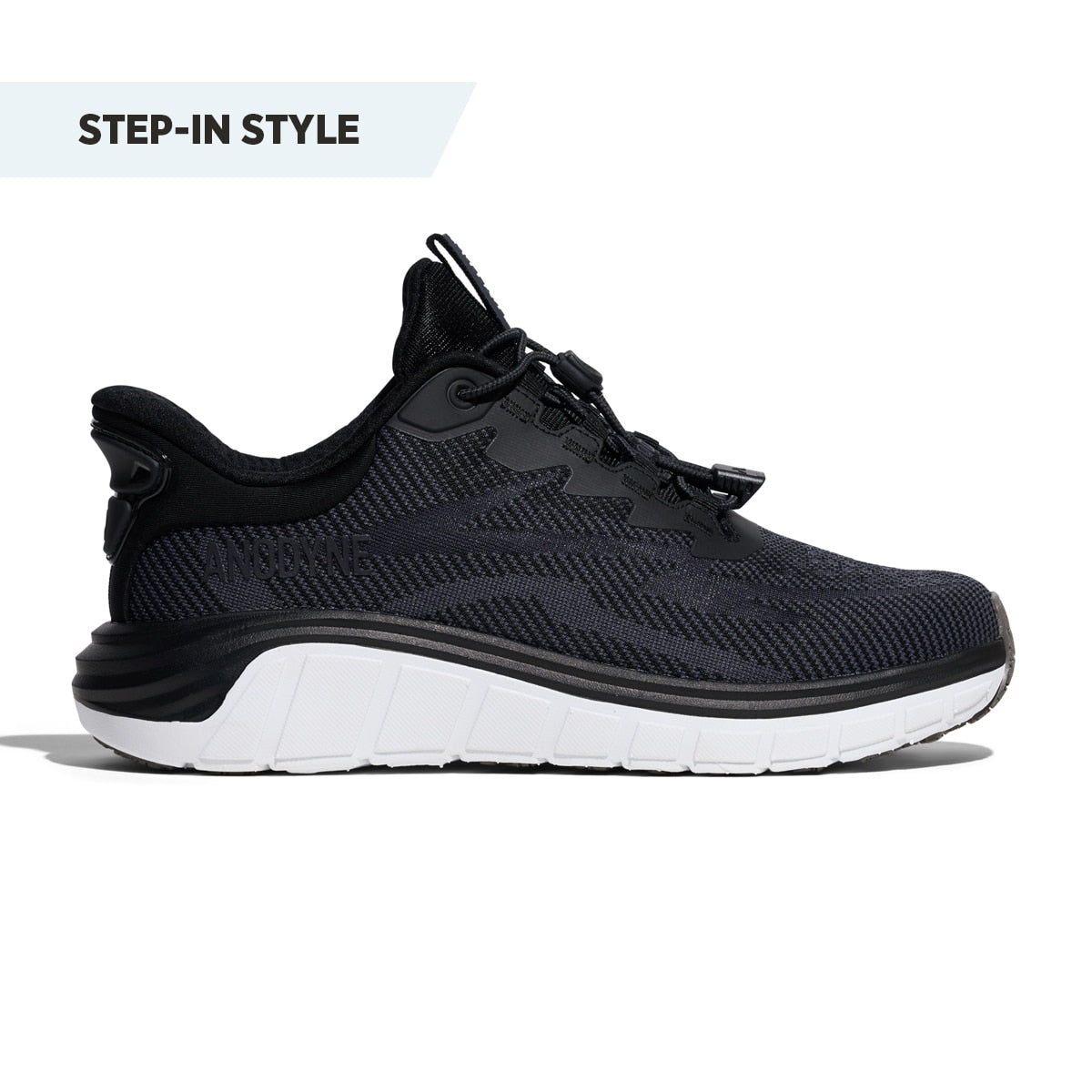

For example, browse current options in women’s walking shoes or men’s footwear. Product availability and the sizes offered can change, so confirm the width and size on the listing before ordering.
A good fit is about more than the letter
Use width labels to narrow your search, not to make the final call. Check that the shoe has room at the forefoot, enough depth for your foot and any inserts, and a secure fit at the heel. Try it on later in the day if you can, and pay attention to pressure or rubbing rather than hoping the shoe will “break in” around a sore spot.
When a shoe in your usual length feels tight, don’t automatically size up. Measure again, look at wider and deeper options, and compare the model’s own fit guidance. For swollen feet, the right width can be the difference between a shoe that merely goes on and one that gives your foot room to get through the day.
Shop CAIRS’s adaptive footwear for swollen feet. CAIRS is a Medicare Certified provider; Medicare or insurance coverage depends on eligibility and the specific product. Eligible purchases may also be paid for with HSA/FSA funds, subject to your plan’s rules. Check product details and eligibility before purchasing.


